
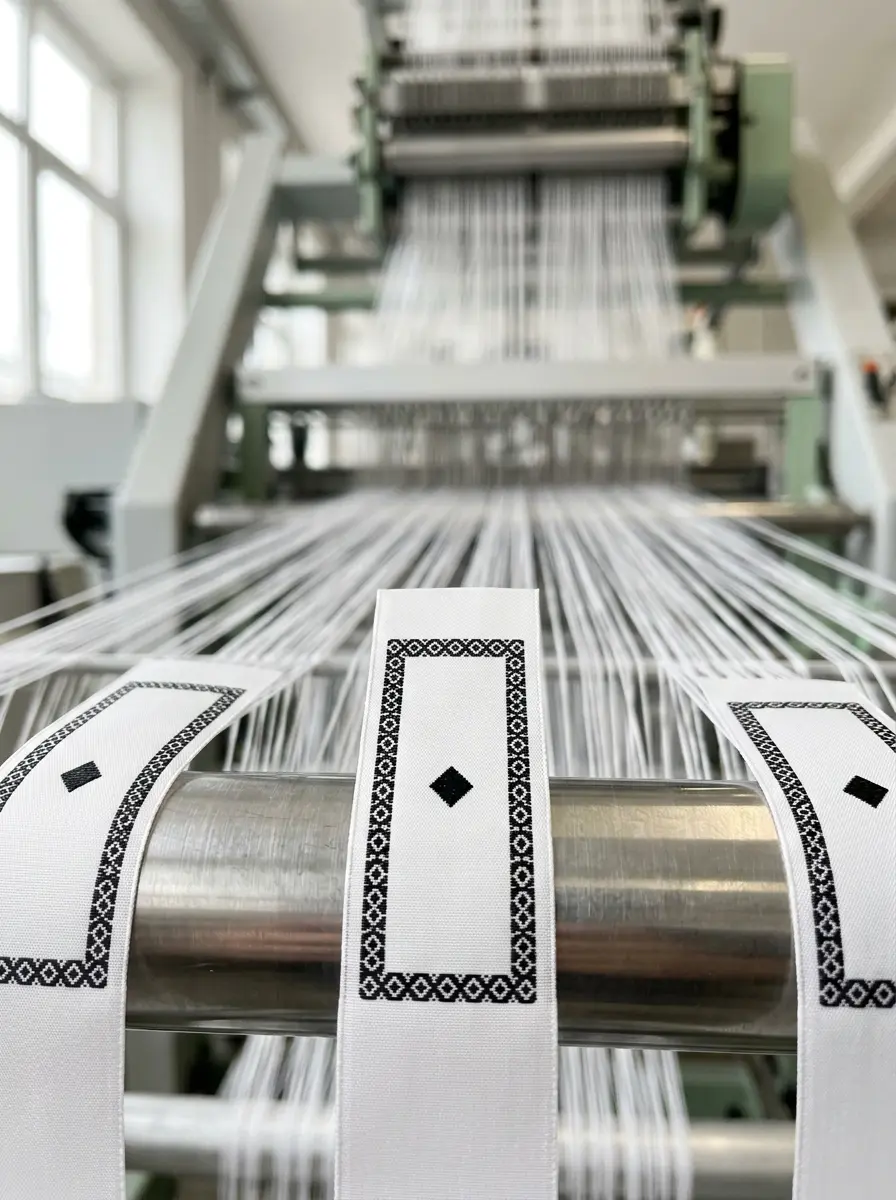
How each one is made
A woven label is made on a loom. The design is built from colored threads woven into the label itself, so there's no ink to fade or rub off. A printed label starts as plain ribbon, usually satin, cotton or a paper-based material, and the design is printed onto its surface.
Side by side
| Woven labels | Printed labels | |
|---|---|---|
| Feel | Textured and substantial | Smooth, flat and soft |
| Durability | The design lasts as long as the garment | Depends on the ink and ribbon; good inks hold through repeated washing |
| Fine detail | Very small text and thin lines lose clarity | Sharp small text and fine lines |
| Amount of text | Best for short text: a name, a logo, a size | Fits long care and content text, including several languages |
| Typical use | Brand labels, size labels, logo tabs | Care labels, content labels, budget brand labels |
| Cost per piece | Higher | Lower |
When to choose woven
Choose woven when the label is part of the brand experience, like the neck label a customer sees when trying the garment on. Woven labels keep their shape and color for the life of the garment, and the texture reads as quality. Keep the artwork simple: bold shapes and short words weave cleanly, while thin lines and very small type don't.
When to choose printed
Choose printed when the label has a lot to say. Care symbols, fiber content, country of origin and text in several languages fit comfortably on a printed label. A smooth satin label also sits softly against the skin, and printed labels cost less, which matters on high-volume basics.
Using both
Many garments use both: a woven brand label at the neck and a printed care label in the side seam. Ordering both from one supplier keeps sizes, colors and delivery dates aligned.
See our woven labels and printed and care labels, or request a quote with your artwork.